
White County Civil Docket Searches
Search ARCourts is the statewide public system covering participating Arkansas courts. It offers both a participant search and a case search. A case number pulls the cleanest result. Party searches work through First Name, Middle Name, Last Name, and Organization or Case Description. When a company or public body appears in the caption, the organization field earns its keep. Advance Search narrows results by White County, court, date, and case type. No search beats picking the right court first. General civil and domestic-relations cases belong to White County Circuit Court. Small claims and limited civil matters go to the District Court. That means the department where the case was filed. Estates and guardianships route to the County Clerk. If nothing matches, loosen tight filters. Retry with a case number or an alternate party spelling. Also consider whether the case actually sits with a different office.
- Select participant or case mode on Search ARCourts.
- Enter a party name, organization description, or exact case number.
- Apply White County and the correct court or case-type filters.
- Compare the caption, court, filing date, status, and participants before opening the result.
- Read the latest events and request the actual filing or judgment from its clerk when needed.
White County Civil Docket Search Fields
Two ways in. The public interface splits a broad participant search from a direct case search. Search text needs at least three characters to work. Filters on the live official system can shift. Trust the labels on the screen in front of you rather than a fixed layout someone described once. The quick case search takes a case number or a citation number. Civil results may include the case number, filing date, description, case type, status, court, and participant data. That covers the White County matter you pulled up.
| Field | Use | Format note |
|---|---|---|
| First, Middle, Last Name | Find an individual participant | Middle name is optional or unspecified |
| Organization or Case Description | Find an entity or descriptive caption | Useful for company parties |
| Case Number | Open a precise case | White County circuit examples use a 73 prefix |
| Advance Search | Add court, county, date, type, or docket filters | Remove excess filters after a no-result search |
Why does the court filter matter so much here? The official Arkansas District Court overview lays out the limited civil jurisdiction that makes picking the right court essential in any White County docket search.
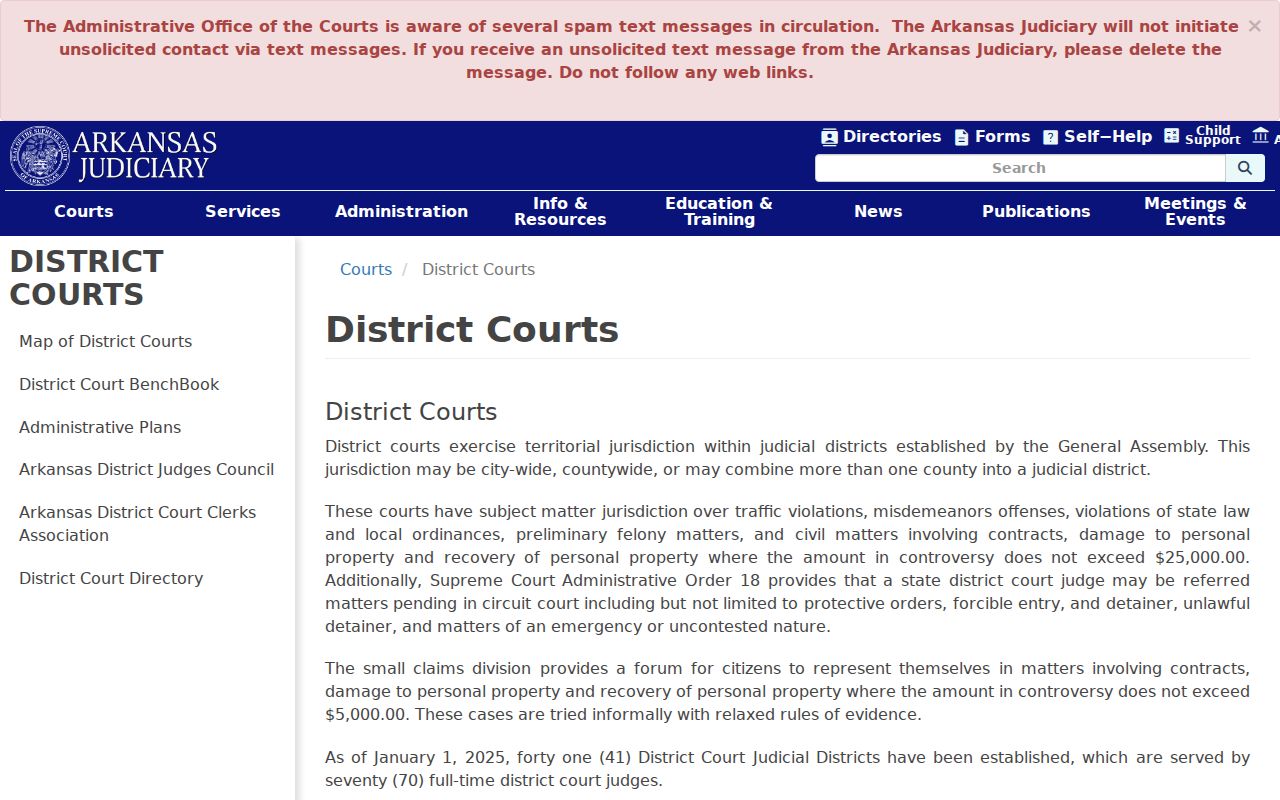
That court-level point has real consequences. A White County small claim may sit with a local District Court department instead of the Circuit Clerk, so searching the wrong office can leave a case looking invisible.
Civil Dockets: What They Show
Think of a White County civil docket as a timeline, not the full case file. The header gives you the court, case number, caption, type, filing date, and a broad status. Participant blocks then label plaintiffs, defendants, petitioners, respondents, and counsel where public. From there, the event history tracks the initiating pleading, service, answers, motions, responses, notices, settings, orders, judgment, and any later enforcement or appeal activity. Each entry is a record of what was filed or happened. It appears in order, as the case moved along.
| Case number | A unique identifier in the White County circuit civil pattern 73CV-year-sequence. |
|---|---|
| Caption | The short title that identifies the parties or subject. |
| Service | Summons and return entries that show docket activity related to delivery of process. |
| Motions and orders | Separate request and ruling entries that must not be confused. |
| Settings | Notices, hearings, trial dates, and later resets when entered. |
| Judgment | The court's adjudication; the signed document controls its scope and terms. |
A docket line can name a judgment without attaching the document itself. The image may simply be missing. So a filing entry proves the judgment exists. It does not show you what the judgment says. A bare "closed" label raises the same caution. Some claims or parties may still be open even after the word appears. Pull the judgment itself and any post-judgment entries that follow it. Then decide what the White County court docket really settled.
White County Civil Docket Filing Path
Think of a civil docket as a timeline. It opens with a complaint or petition. Then come summons and return entries, which deal with serving the other side. An answer follows the pleading. From there, a motion asks the judge for a ruling, and the order is what the judge actually decided. Notices and settings push the case toward hearing or trial. Judgment settles rights or liability. Writs, abstracts, garnishments, or an appeal can come after that in the White County court docket.
Civil docket flow: Complaint or Petition → Service → Answer → Motion → Order or Hearing → Judgment → Post-Judgment Activity.
The filing path branches. A pleading can be amended. A hearing gets reset. A claim may even end by nonsuit or dismissal. Some judgments resolve only part of the case, leaving other claims alive. Track the dated entries and read the court's actual order rather than trusting the label alone. In short, the event name is a search clue. It is not the ruling itself.
What Cases Fill the Civil Docket
Not every civil case sits in one courtroom. White County Circuit Court takes general civil disputes, domestic relations, and the larger or more complex claims within its jurisdiction. District Court covers small claims and limited civil matters under current Arkansas law. The exact dollar limits shift with the statutes. Check current official jurisdiction material instead of relying on an old summary. Probate work also belongs to the Arkansas court system. It reaches you through a different office's records than the civil docket.
| Matter | Likely White County court | Custodian |
|---|---|---|
| General civil and domestic relations | White County Circuit Court | White County Circuit Clerk |
| Small claims and limited civil | Filing District Court department | That department's clerk |
| Estate, guardianship, or civil commitment | Probate record stream | White County Clerk / Probate Clerk |
| Adoption | Probate record stream | White County Clerk; sealed and confidential |
For the official picture of what a district court can hear, the Arkansas Judiciary District Court overview lays out the limits of that jurisdiction. Knowing the split matters in White County. It keeps a small-claims request from landing at the circuit counter by mistake.
White County Civil Docket Custodians
Two Searcy offices split the White County civil docket. Aim your request at the right one. The Circuit Clerk handles circuit civil and domestic-relations cases. The counter at 300 North Spruce Street is open Monday through Friday from 8:00 a.m. to 4:30 p.m.; call 501-279-6203. District Court works differently. Each department keeps its own clerk for the small-claim and limited civil docket. The department named in the case header tells you which local office to contact.
The other office sits nearby at 315 North Spruce Street. That is the White County Clerk and Probate Clerk, reachable at 501-279-6204 during the same weekday hours. Its files cover County Court orders and probate matters. Those run from estates and guardianships to small estates and civil commitments. Adoptions are sealed and confidential, the office states plainly. Crossed requests waste time. A probate file sent to the Circuit Clerk, or a general civil ask sent to the Probate Clerk, only slows the docket search down.
White County Circuit Clerk
300 North Spruce Street
Searcy, AR 72143
501-279-6203
White County Clerk / Probate Clerk
315 North Spruce Street
Searcy, AR 72143
501-279-6204
Hearings on the Civil Docket
A civil setting in White County can take several forms. Motion hearings, pretrial conferences, docket call, and trials all count. So do other case-management events. This is not a criminal arraignment or plea setting. The civil docket instead tracks claims between plaintiffs and defendants, or relief sought by petitioners and respondents. One trap catches many readers. The date a paper was filed is never the hearing date. Find an entry labeled as a setting first. Then scan the later docket history for continuances or resets, because an old setting can linger after the case has moved.
Search ARCourts makes a good first check. Still, it is not the final word on whether a hearing is actually going forward. For a White County circuit matter, confirm with the assigned trial court administrator. Division 1 uses 501-203-0323, Division 2 uses 501-279-6212, and Division 3 uses 501-279-6221. A District Court civil case goes through its own department clerk instead. The clerk posts no countywide daily calendar. No standing remote-hearing link is published either.
Note: An older date may remain in the docket history. The newest valid setting or court notice controls.
White County Civil Docket Terms
Two White County civil entries that look alike can carry very different legal weight. A motion asks. An order directs. The court has not ruled just because a motion appears in the docket. A nonsuit is the plaintiff's own act ending a claim. The rules and the order's terms govern it. A dismissal, by contrast, can rest on some other ground. A default judgment follows a failure to defend as required. Still, its real reach can only be read in the signed judgment itself.
- Complaint or petition
- The pleading that begins a civil claim or asks for relief.
- Return of service
- A docket entry about delivery of process.
- Motion
- A party's request for a court ruling.
- Order
- The judge's written direction or ruling.
- Nonsuit
- A plaintiff's termination of a claim, subject to governing rules and order terms.
- Default judgment
- A judgment entered after a party fails to defend as required.
What comes after judgment matters too. A writ, an abstract, a garnishment, or an appeal can show up long after the first judgment. The word "Closed" does not erase that later history. When an entry's effect counts, get the document from the custodian instead of trusting a short portal label.
White County Civil Docket Judgment Images
The White County civil docket lists a judgment but shows no image? Write down the case number, the court, the document title, and the event date. Then call the proper clerk. Say whether you want to inspect the file. A plain copy and a certified copy are different asks, so name the one you need. The Circuit Clerk takes inquiries at the counter. Phone, email, a web contact form, and mail also work. For mailed work, ask first about the total fee, accepted tender, page estimate, return method, and turnaround.
The county's official pages post no court-copy price. There is no certification charge listed, no archive tariff, and no guaranteed response time. An image in a portal is not a certified judgment. For statewide forms, the Arkansas Judiciary court forms library is the official source. That page publishes the form sets the courts use.
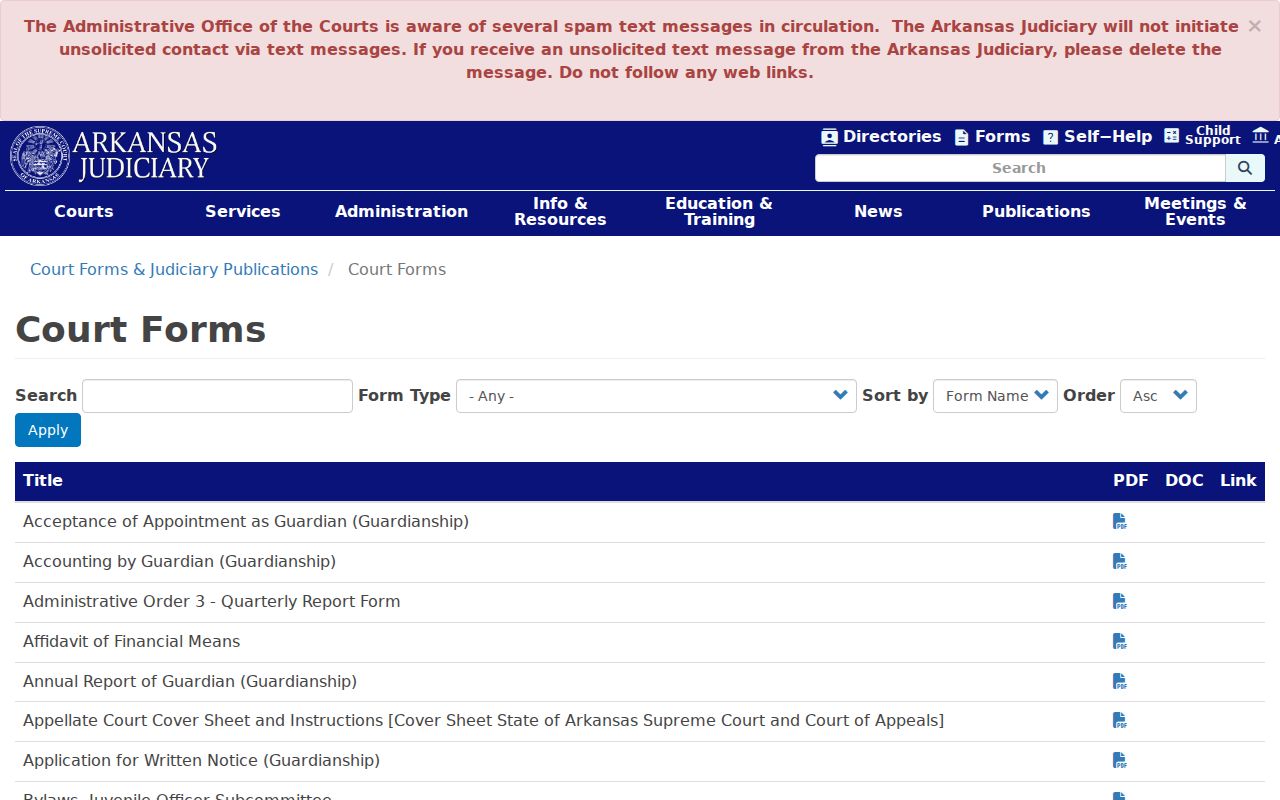
The forms library can help you name a filing type. The White County clerk stays the source for the actual filed document and any certification.
Who Can See Civil Dockets
Plenty of White County civil docket entries are public. Electronic access, though, is not the same as walking into the courthouse. Arkansas Supreme Court Administrative Order No. 19 governs who may see court records. It also sets out what gets excluded. A court order or state law can restrict an entire case. The limits can also touch one document, or certain details inside it. A domestic-relations case may show up as existing. Child information, protected exhibits, or particular proceedings can stay closed from view.
Arkansas access boundary: Administrative Order No. 19 governs court files. The Arkansas Freedom of Information Act applies to many public-agency records but does not promise a different deadline or override judicial access rules.
For the state statutes that work alongside those court rules, the official Arkansas law access service publishes the full code online. That page is the place to read the statutes themselves.
The state source can point you to the governing law. Access to a specific White County civil file, though, is decided by the assigned judge and the record custodian. A docket search that turns up nothing does not prove no case exists. Check the spelling, the number, the court, and the year. Then ask whether the record is offline or restricted. Adoption files are expressly sealed and confidential. Protected personal identifiers should never appear in public view.